Modernizing a Legacy Pet Retail Experience
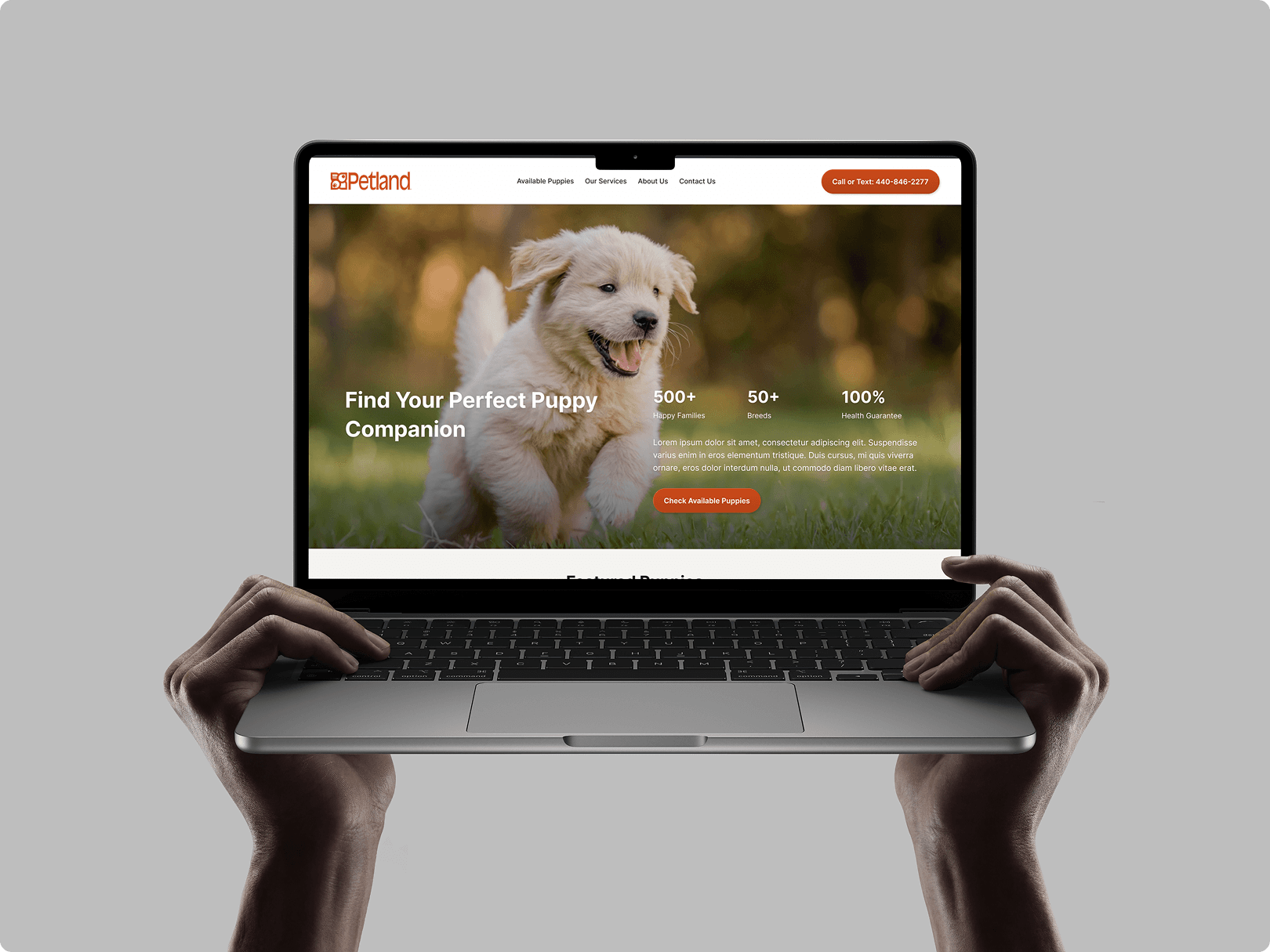
Discovery & Market Alignment
Discovery & Market Alignment
Weekly collaborative reviews to align the redesign with current market expectations, competitor patterns, and Petland’s business goals.
UX Strategy & IA
I led the restructuring of the site experience with a strong focus on SEO + AI discoverability.
Proof Of Concept Prototyping
I created rapid Figma prototypes early in the process to validate navigation patterns, conversion flows, and overall visual direction.
Design System & Handoff
Template-Driven Design System
I crafted a modular Figma design library designed specifically for implementation within the existing codebase. The system emphasized reusable components, scalable templates, and structured naming conventions so the experience could later be adapted and re-skinned for additional pet retailers efficiently.
Developer Handoff & Implementation Alignment
The redesign was structured intentionally around the limitations and opportunities of the current platform. Components, layouts, and interaction patterns were documented with implementation practicality in mind, enabling a smoother developer handoff without requiring a full rebuild or platform migration.
Friction factors in the current state
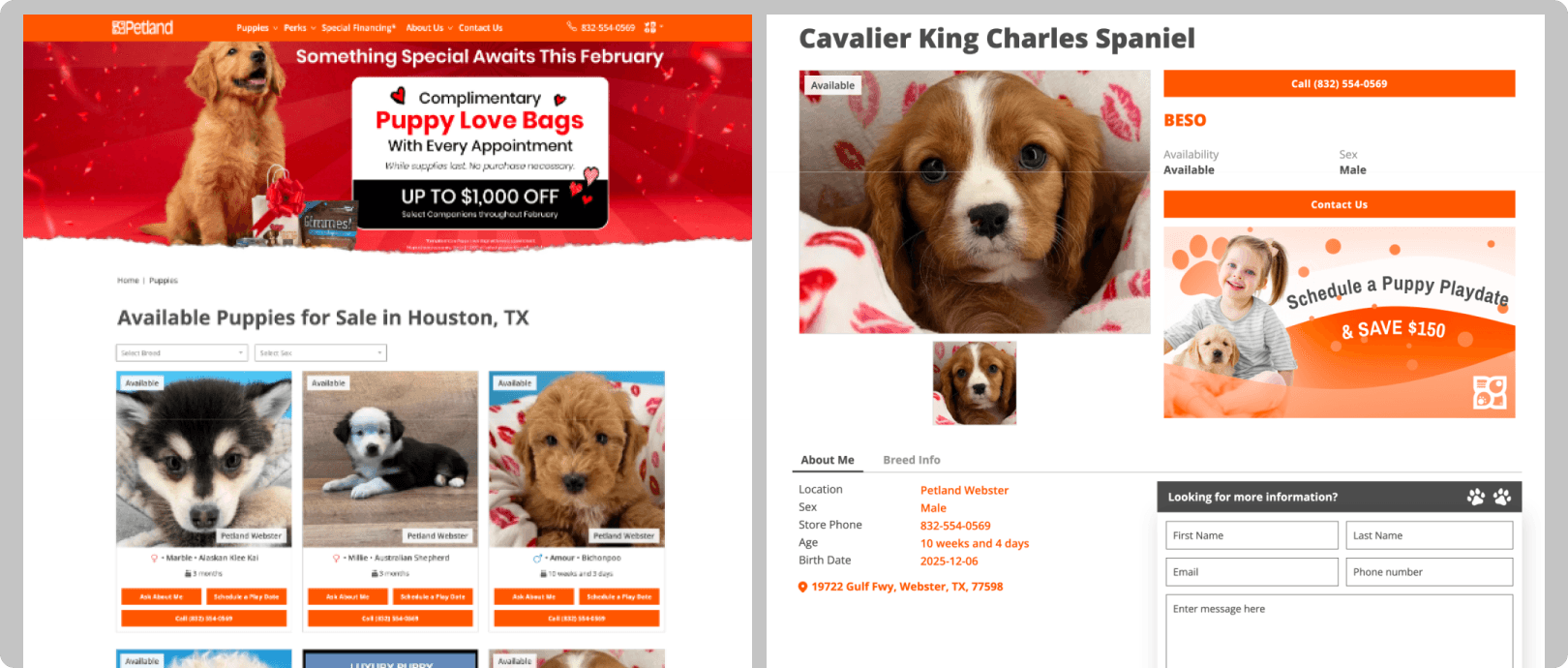
CTAs competed with each other
Equal visual weight diluted the primary booking objective.
Not optimized for conversion
Once users scrolled past the primary CTA, there was no consistent reinforcement to re-engage high-intent visitors.
Trust is not sequenced progressively
Trust signals were present, but not structured to build confidence progressively before prompting action.
Design Strategy
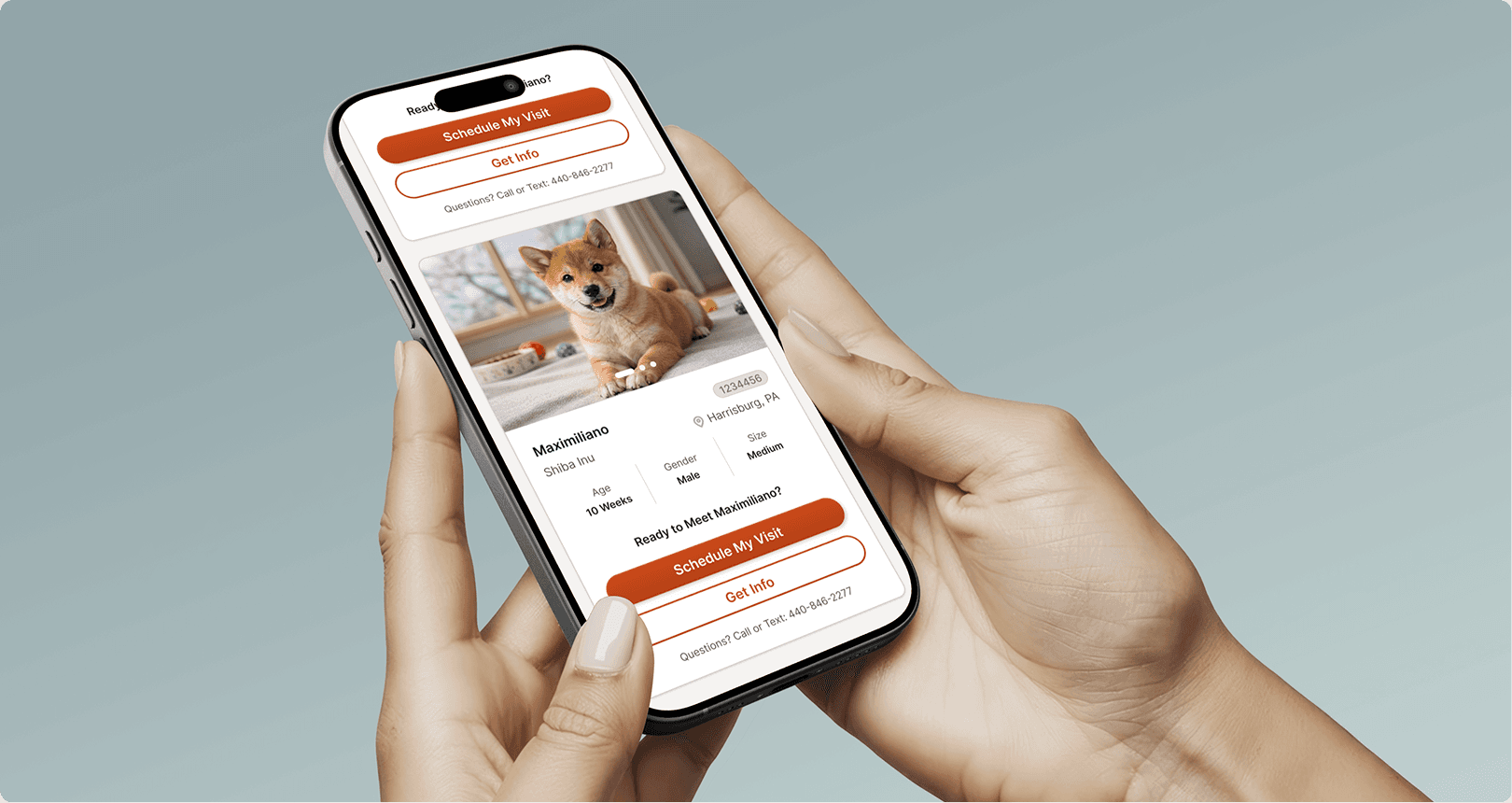
Ready-to-meet language
Primary CTA becomes scheduling-focused. Messaging uses intent language.
Measurable Digital Bookings
Turn interest into trackable, store-level appointments.
CTA Simplification
Contextualize actions by intent. Centralize main conversion options while prioritizing in-person visits. Align wording with user mental models.
Increasing In-Person Visit Conversion
We’re not optimizing for traffic. We’re optimizing for booked in-person visits.
In Person Visit
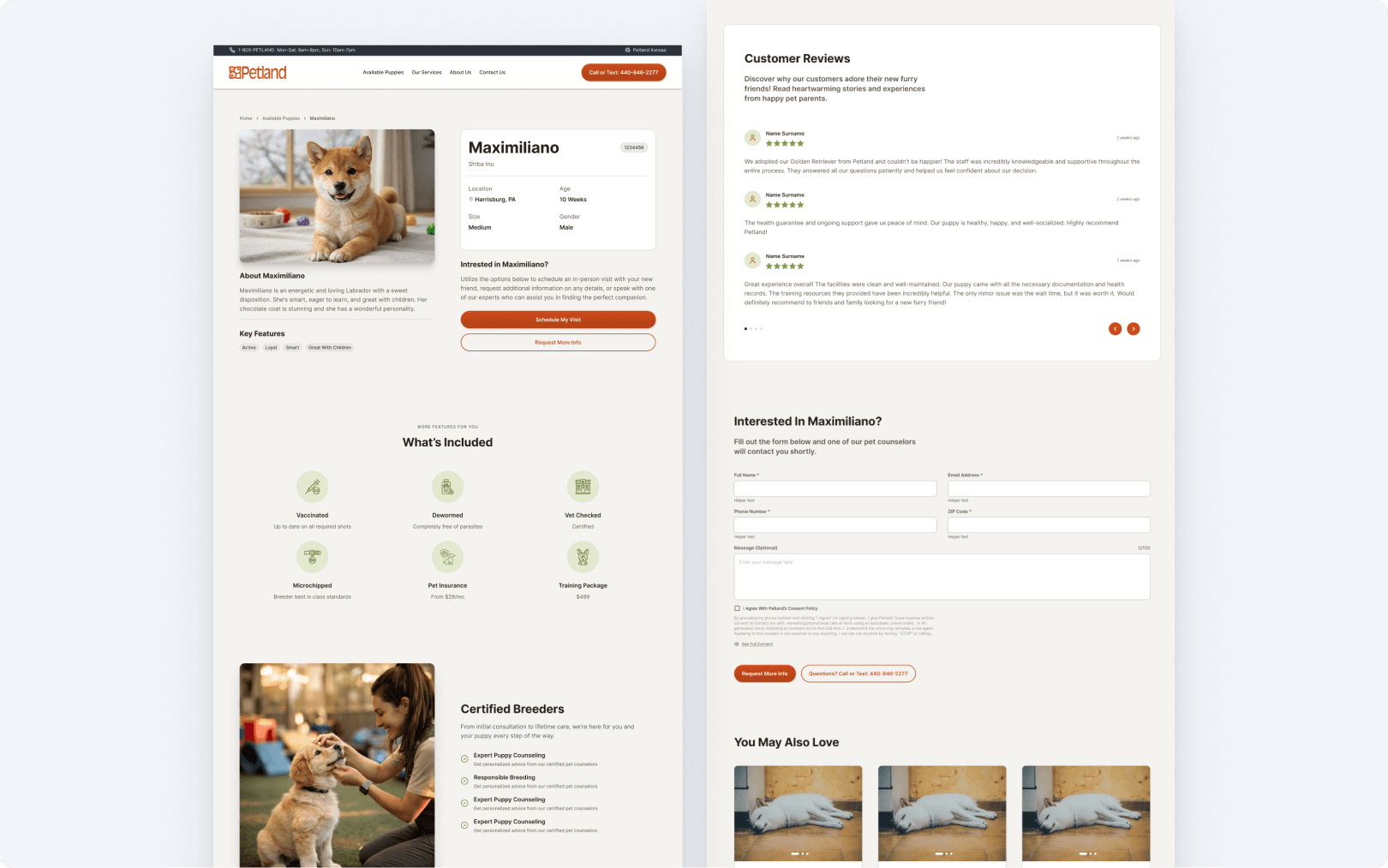
Anchor the experience around Petland’s core differentiator: in-store connection.
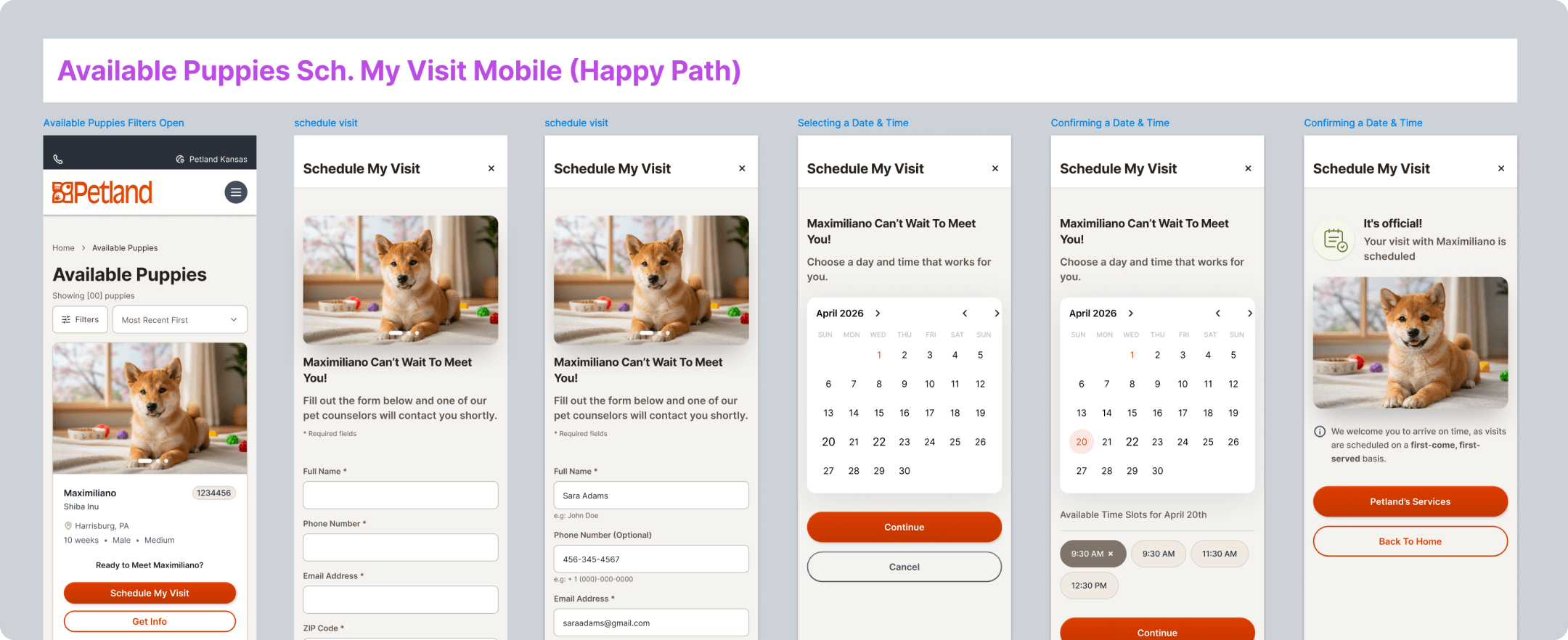
Guided Appointment Flow
Remove friction and guide users toward a clear next step.
Certified Breeders
Reduce purchase anxiety through visible standards and included value.
Trust Sequencing
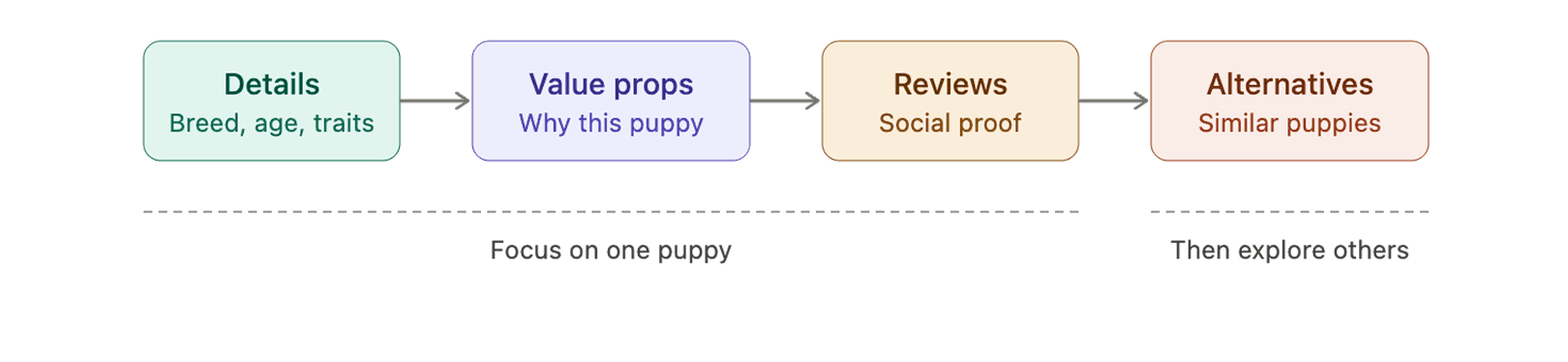
The redesigned puppy detail page builds confidence in a deliberate order—essential details and value first, social proof next, and alternative puppies only after the visitor is focused on one pet.
Semantic Design Foundations
Well Defined Components
Reusable components designed to balance visual consistency with implementation flexibility. The system established clear behaviors, hierarchy, and interaction patterns while remaining adaptable to evolving business and merchandising needs.
Modular Layout Framework
A modular content structure designed to support seasonal campaigns, promotional priorities, and store-specific customization without requiring full layout redesigns. This approach enabled faster iteration while preserving a cohesive customer experience.
Scalable Token Architecture
Structured semantic tokens and reusable design foundations created to support long-term scalability, easier maintenance, and future brand expansion. The system was intentionally built to simplify re-skinning and streamline developer implementation across additional pet retail experiences.
Rapid Proof-of-Concept Prototyping
Validating early how interactions and the overall layout and structure were working together through quick prototypes reduced the friction along all the process enabling smooth alignment and low friction feedback sessions helping project to move faster.
This structural shift was designed to reduce drop-off by aligning primary actions more closely with user intent.
Note: Hypothesis-Driven